
How firms can make smarter tech decisions
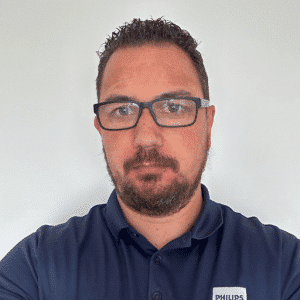
Ryan Prins, senior account executive at Philips Speech AI Solutions, explains why education, due diligence and a clear understanding of firm needs are essential to choosing the right tools — and why the vendor’s role is key

As the legal tech race accelerates, it’s becoming increasingly difficult for leaders to cut through the noise and identify which tools could make a meaningful difference to their operations. With options multiplying and the legal tech stack becoming more sophisticated, taking the time to truly understand how different solutions align with specific needs and how they would benefit the firm is essential, but challenging.
Ryan Prins, senior account executive at Philips Speech AI Solutions, says there’s a growing eagerness among law firms to adopt new technologies, which can sometimes lead to people bypassing approval processes and buying the tools themselves. This can result in duplicated systems, a fragmented tech stack and reduced efficiency.

“Education around what tools are available and what they can and can’t do is one of the biggest challenges for law firms right now. In our case, we may hear leaders saying that they’ll replace dictation tools with drafting ones, but, in reality, these systems should complement each other,” he notes.
Prins says that while decision-makers must try to keep abreast of innovation and tech developments to invest in the right technologies, vendors play a fundamental role in helping leaders and partners understand what tools bring true value to their firms. This education piece goes beyond simply explaining what a specific product or feature does — crucially, it’s about providing broader guidance on aspects such as unsafe practices or risky behaviours that may spell trouble for firms.
As an example, Prins notes that he’s seen SpeechLive clients use email to share dictation or transcription files rather than doing it through the dedicated, securely encrypted app. “They probably didn’t think it was a problem to send the files by email, so educating them on the implications and potential consequences of doing this — beyond just our own solution — is key. As a vendor, sometimes, you really need to take a step back and break it down in simple terms. We’ve got lots of people with many years of industry experience, so we can do extensive training and consulting with customers rather than simply selling them the product and leaving them to their own devices,” he says.
Innovation, productivity and lessons for the AI era
While education and risk awareness have always been essential to any technology investment, they have become critical priorities in the era of AI, where new solutions seem to emerge constantly and keeping pace may seem like an uphill battle.
Firms looking to bring in AI tools to drive transformation and increase efficiency don’t need to choose between innovation and compliance — they can have both, but they do need to prioritise due diligence (both on the products and the vendors) to safeguard their operations: “Many platforms use the same AI engine. There are also many new startup companies popping up, perhaps using vibe coding or free tools to build their solutions, so you really do need to look into those things,” says Prins.
He points out that, unlike free systems, tools like Philips SpeechLive are designed to keep all data fully encrypted and stored securely throughout the entire dictation or transcription process. The solution also has ISO 27001 certification, the global standard for information security management systems.
“We have a trust centre on our website that includes all our certifications and compliance documentation. But then there are some firms that will just skip through that and go straight to choosing a tool. It’s important to make sure you pick a provider with a good reputation.”
As AI takes over more production-related tasks and workflows, the data protection aspect becomes even more central — but this shouldn’t be a reason for firms to slow down their transformation or productivity efforts. Prins points to document creation as one of the areas where technologies such as Philips SpeechLive Legal AI Assistant, set to launch in the coming weeks, can support more efficient, tech-enabled ways of working while keeping operations secure.
The solution uses unstructured, natural language recordings to populate pre-set, tailored document templates. “You can prompt SpeechLive Legal AI Assistant to produce, for example, a tenancy agreement under Scottish law. The system will create that template and then use your recording to automatically populate the different parts of that template. This can go straight into your document management system, so it’s a bit like a one-stop shop,” he explains, highlighting that this streamlined process can free up lawyers’ schedules and enable them to focus on higher-value client work.
For firms in the thick of a tech procurement process, Prins encourages leaders to lean on vendors to answer all their questions about a tool — especially around data protection and sharing — and carefully weigh the firm’s needs against product capabilities before committing to one.
“Firms need to make sure they’ve looked at all the solutions out there. Someone might come to us and say that they need AI or speech recognition, but perhaps it’s actually another tool that they need or even something they already have. We’re quite transparent and honest with the customer in our suggestions. When it comes to speech recognition technologies, firms shouldn’t just focus on the accuracy aspect, but on the end-to-end process: it’s more about completing a job with the fewest clicks. If you can have a solution that does that and allows your lawyers to spend time with the client and exercise the actual judgment, that’s where the real value lies.”