
Finding your voice: Driving efficiencies with speech recognition
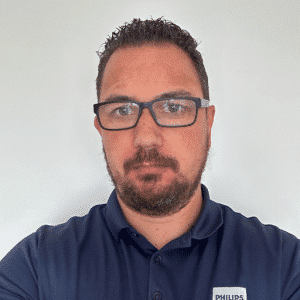
Ryan Prins, senior account executive at Philips Speech AI Solutions, speaks to LPM assistant editor Celeste Rivas about how AI-powered speech recognition tools can help firms drive time savings and build a positive client experience

With productivity becoming an increasingly critical goal for many SME law firms, streamlining low-value, time-consuming processes has become a more pressing imperative: according to the LPM Frontiers 2026 research, automation has become the top investment priority for 42% of SME leaders this year. While crucial for delivering outcomes, tasks like note taking fall in this category, absorbing time and resources to collate, edit and share with stakeholders.

Ryan Prins, senior account executive at Philips Speech AI Solutions, points out that this is one of the main reasons firms decide to explore speech recognition technologies, particularly AI-powered ones. “Lawyers are spending a lot of time on admin tasks and less time on billable work, so being able to reduce the administrative burden and free up their schedules to focus on higher‑value work is incredibly helpful,” he says.
As client expectations around speed continue to grow, a fast turnaround can become a key differentiator for firms and help them build a better client experience, Prins adds. For example, using speech recognition tools such as SpeechLive can make communications more efficient by enabling lawyers to share clear notes almost instantly after a call or a meeting has ended, and include a summary and action points to save their client additional reading time. “It’s about needing fewer clicks to produce a document that needs only minor editing, from start to finish and in the shortest amount of time possible,” he highlights.
Voices in the cloud
Confidentiality and compliance with data regulations are key areas of concern for law firms, and using dictation or speech recognition tools can heighten those worries — particularly if these are AI-enabled, which adds a new layer of complexity.
“Law firms want to know about vendors’ data storage and GDPR policies, which AI engine the speech recognition tool uses and whether their data is being used to grow language models for other customers,” he explains.
This is a key aspect where paid tools set themselves apart from free services, notes Prins: “Unlike many free apps, SpeechLive is GDPR compliant and ISO 27001 certified, so you know your data is not going to be used elsewhere,” he adds.
In this sense, he explains how SpeechLive is designed to keep data protected: “SpeechLive uses the highest level of end-to-end encryption on the dictation side. When someone dictates into a Word document, we don’t store the actual audio on a remote server somewhere. The system streams the data to the server using HTTPS protocol security, it produces the text, and then it’s back onto the document. And that happens in a secure environment on the customer side.”
Prins also notes that while concerns about the security of cloud‑based systems, including dictation and speech recognition tools, have eased in recent years, he still speaks to leaders who feel more comfortable keeping data on‑premises — even where this brings higher costs and a greater risk of downtime in the event of a failure or cyberattack.
He stresses that, very often, a cloud solution is the more robust choice: “Hyperscale cloud service providers can move data from one container to another, meaning that there’s little to no downtime if an issue arises. However, if you are an on-premises mid-sized law firm and your server crashes, you’ve got to get it back up and running — but you won’t necessarily have a secondary server. That means you could have a lot of downtime in your organisation.”
A new chapter for speech recognition
Prins notes that while speech recognition technologies have been around for decades, they have improved markedly in recent years. This has helped allay concerns around quality and accuracy — a common frustration with older tools that required extensive user‑specific voice training.
The improved accuracy has helped legal people see automated dictation tools more positively as a way to streamline their work and achieve a better work-life balance rather than as a direct threat to their job.
“A few years ago, secretaries would think speech recognition was going to replace them. Now they’re realising that if they can get a first draft of a document quickly, they can leave work on time instead of struggling to figure out how to prioritise their tasks. These tools allow you to take a load of documents and get them produced while you go to another meeting or to lunch,” he explains.
Prins adds that another common misconception around speech recognition and dictation systems is that they will be replaced by drafting tools. Instead, he views them as complementary solutions that can further improve document production and allow lawyers to focus on what they do best: using their knowledge and expertise to support clients. This is what Prins views as the next innovation step. “If you can use voice to dictate and put your thoughts to paper — instead of just letting the software do it — and then have an AI drafting tool build on that, that’s a win. That ability to combine tools is what success looks like.”